

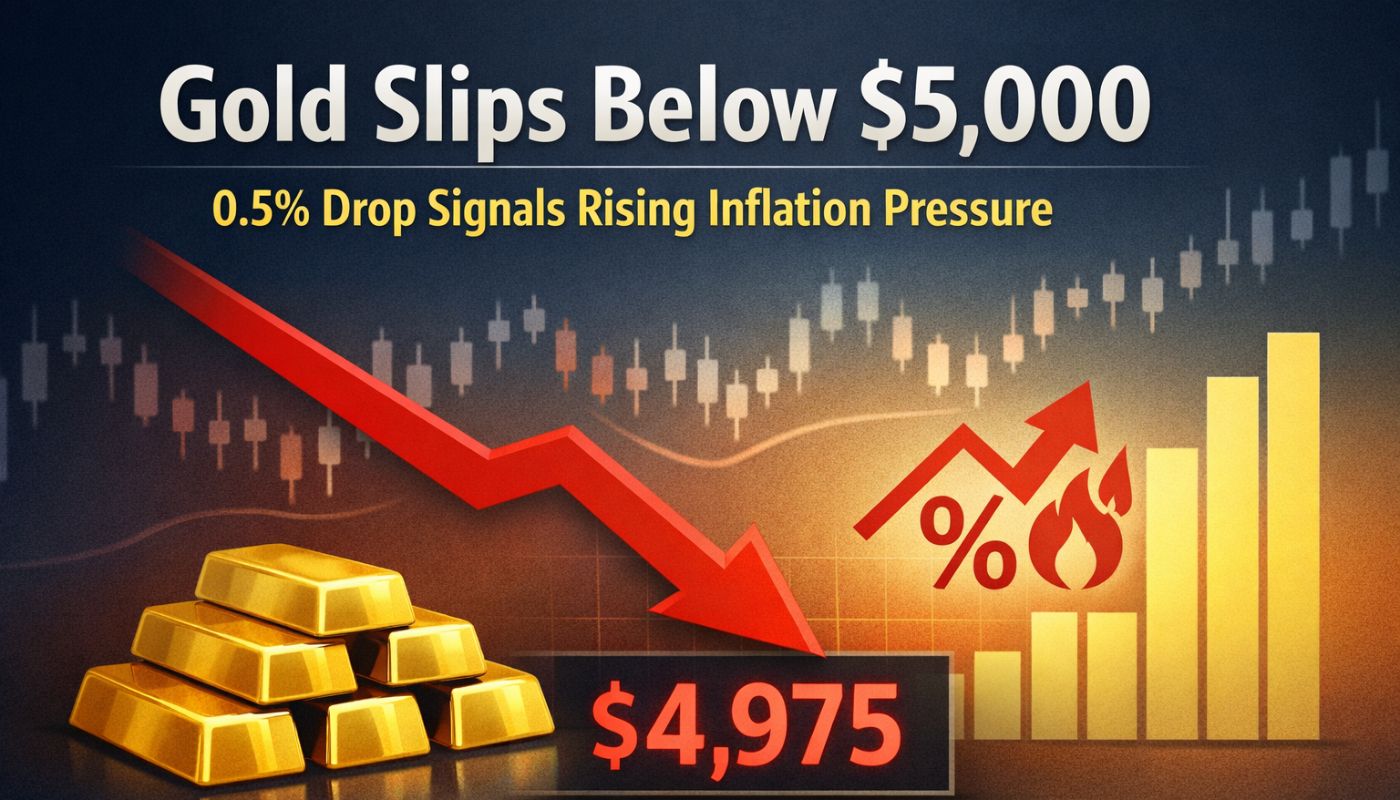
Gold prices slipped under the critical $5,000-per-ounce level during Asian trading on Monday, reflecting growing investor caution as geopolitical tensions and inflation concerns intensified. Spot gold declined 0.5% to $4,995.21 per ounce, while gold futures experienced a sharper fall of 1.3% to $4,996.96 per ounce.
The decline comes as global markets closely monitor the economic consequences of escalating conflict involving the United States, Israel, and Iran. Investors are increasingly worried that higher energy costs could drive inflation higher, forcing central banks—particularly the Federal Reserve—to maintain restrictive monetary policies for longer than expected.
Rising oil prices have become a central issue. Crude has surged above $100 per barrel, largely due to supply concerns tied to tensions in the Middle East. Higher oil costs typically raise transportation and production expenses across the global economy, which can eventually push consumer prices upward.
Despite gold’s reputation as a traditional safe-haven asset during geopolitical crises, the metal has struggled to attract strong buying interest during this conflict. Instead, traders appear more focused on the economic ripple effects of rising energy prices and the possibility of higher interest rates.
Iran Conflict Fuels Energy Inflation
Over the weekend, tensions escalated further after U.S. and Israeli forces targeted a key Iranian export terminal. Tehran responded with strong warnings of retaliation, suggesting the conflict could continue without immediate resolution.
The situation has disrupted key shipping routes and energy supplies, adding another layer of volatility to global markets. Oil prices briefly surged before trimming gains on Monday after U.S. President Donald Trump said negotiations were underway to reopen a shipping corridor blocked by Iran.
Trump suggested that a resolution to the conflict might be close, although Iranian officials have repeatedly dismissed such claims. Until tensions ease, energy markets are expected to remain volatile, keeping inflation concerns firmly in focus.
Fed Policy Uncertainty Weighs
Gold investors are also preparing for a critical Federal Reserve policy meeting this week. Markets fear the central bank could maintain a hawkish stance if inflation remains stubbornly high.
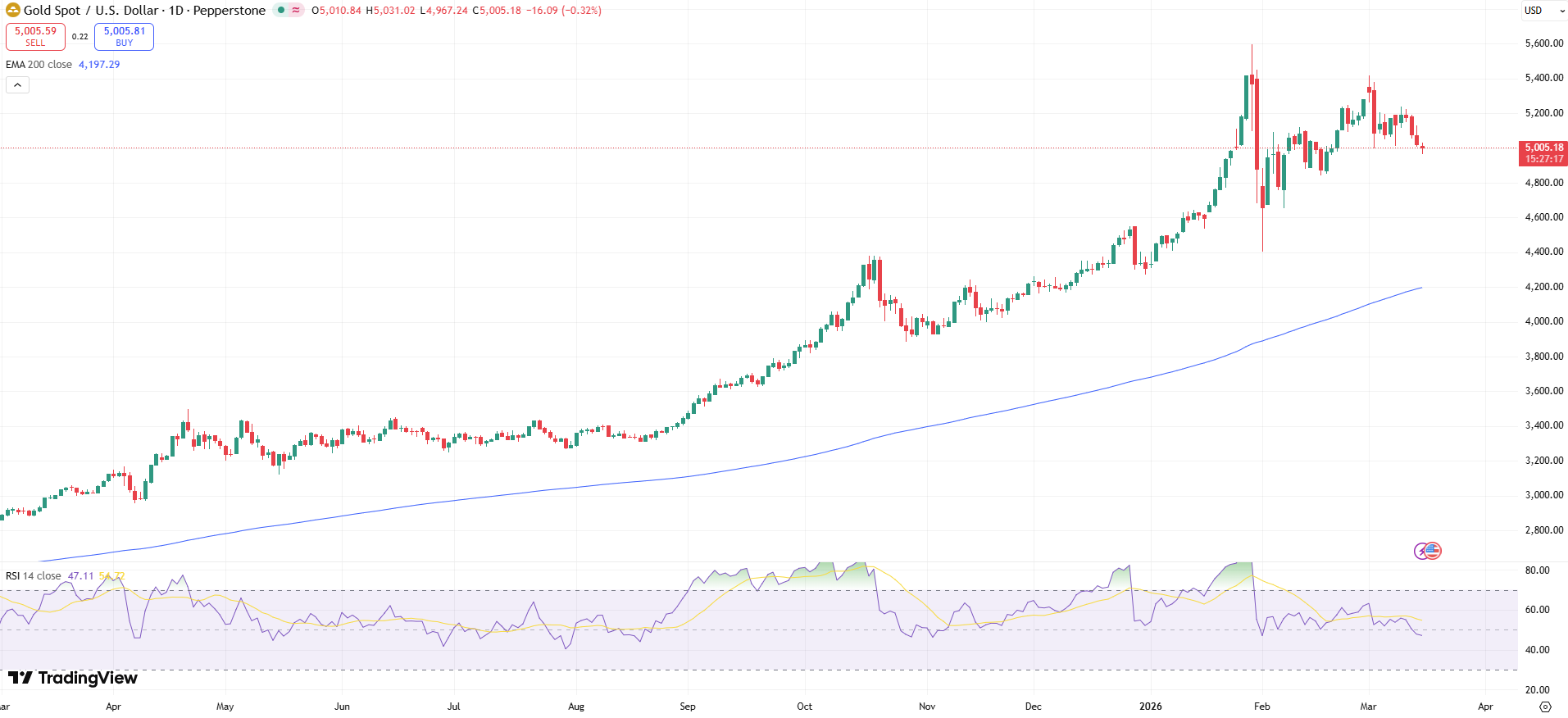
Higher interest rates typically reduce gold’s appeal because the metal does not pay interest, making income-producing assets like bonds more attractive.
Key factors influencing gold prices now include:
- Stronger U.S. dollar, which makes gold more expensive globally
- Rising U.S. Treasury yields, reducing demand for non-yielding assets
- Trader liquidations, as investors sell gold to cover margin calls
- Persistent inflation fears driven by elevated oil prices
Analysts from ANZ noted that despite recent weakness, gold’s long-term role as a hedge against geopolitical uncertainty remains intact.
Meanwhile, other precious metals showed mixed performance. Silver fell 1.8% to $79.18 per ounce, while platinum edged up 0.2% to $2,031.43 per ounce.

