Spot gold traded near $4,490 an ounce on Thursday, down about 0.6% after Wednesday’s more than 4% rally, and still close to $4,500. COMEX futures were a little firmer, around $4,549. Silver was near $67.08. Platinum slipped toward $1,807. The dollar index was little changed at about 98.82. The bid is the same one that lifted bitcoin and Treasuries: the U.S. Treasury raised the cap on long-dated buybacks from $2 billion to at least $4 billion an operation. Lower long yields cut the income investors give up by holding a metal that pays none.
Buybacks Cut the Cost of Holding Gold
Gold has no coupon. When the 10-year and 30-year yields climb, notes become a cheaper substitute. When those yields fall, that penalty shrinks. After the buyback notice, the 30-year yield eased toward 5.18% from a peak near 5.33%. The 10-year was around 4.63%. A Bloomberg index of Treasuries due in 20 years or more rose 1.7% on Wednesday, the most since February 2025.
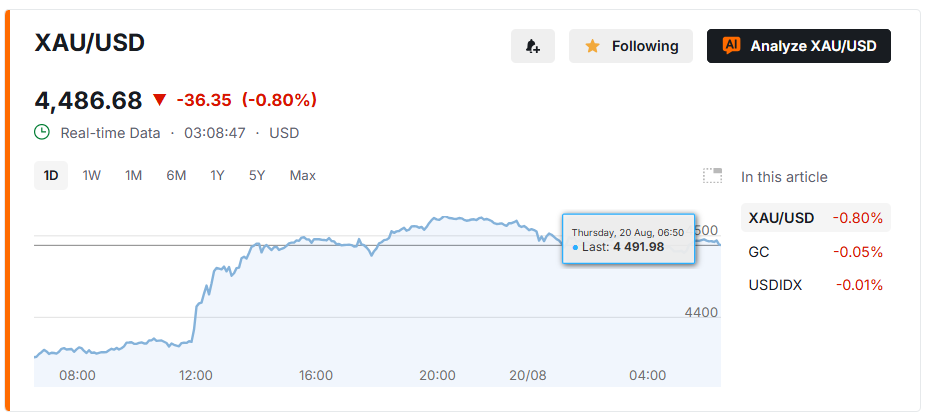
A weaker dollar adds a second, mechanical lift. Bullion is priced in dollars, so a softer DXY makes an ounce cheaper for buyers outside the United States. ANZ described the larger buybacks as an attempt to bring down borrowing costs and said easier financial conditions are typically constructive for gold. That is a market view, not a Treasury forecast.
The fiscal backdrop is part of the story. Gross federal debt has crossed $40 trillion. Interest costs and mandatory spending are rising faster than receipts. That does not force gold higher on any given Thursday. It does keep official and private buyers looking for an asset that is not another Treasury.
Fed Minutes Still Flag Inflation Risk
The Federal Reserve’s July 28–29 minutes, released Wednesday, sit against that yield drop. The committee voted 9-3 to keep the funds rate at 3.5%–3.75%. “Many” participants said tightening would likely be needed if inflation does not fall toward 2%. “Some” said current policy may not be restrictive enough. Three regional presidents dissented in favor of a hike.
Markets have not treated that as a September lock. CME FedWatch has been pricing roughly a two-thirds chance of another hold at the Sept. 15–16 meeting and about a one-third chance of an increase. Chair Kevin Warsh speaks at Jackson Hole on Aug. 28. That is the next scheduled chance for the committee to walk back, or reinforce, the minutes.
Official Buyers Keep a Floor Under Prices
Speculative flows can reverse with yields. Official demand is slower. The World Gold Council’s 2026 survey of 76 reserve managers found a record 45% plan to raise their own gold holdings over the next 12 months. Eighty-nine percent expect global official reserves to rise. Reasons cited include inflation hedging, diversification and geopolitical risk. Central banks have added about 1,000 tonnes a year for four years, twice the prior decade’s pace.
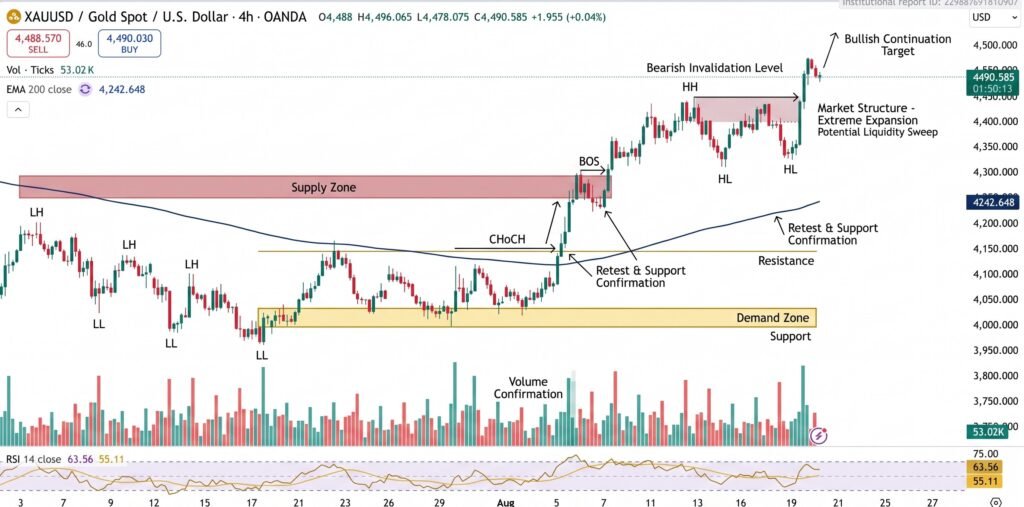
Spot is still well below January’s high near $5,600. It has recovered from a brief touch of about $4,000 last month.
- Spot gold: about $4,490, −0.6% Thursday, +4% Wednesday
- Silver: about $67.08; platinum: about $1,807
- DXY: about 98.82
- Sept. hold odds: roughly 67%; hike odds: roughly 33%
Conclusion
Gold is holding the $4,500 area because long-term money got cheaper overnight, not because the Fed has turned dovish. The minutes still describe a committee that will hike if inflation stalls. Watch the 10-year and 30-year, the dollar, and Warsh at Jackson Hole. If buybacks fade and yields reverse, the same opportunity-cost math that added more than 4% on Wednesday will work in reverse. Central-bank buying can slow that decline. It does not cancel it.
Sources & Methodology
Primary-source standard: Market-moving facts should link to original data releases, regulator notices, company filings or official project announcements whenever available. Secondary reporting is used for additional context, not as a substitute for original evidence.
Page last reviewed: