
Hyperliquid Strategies is pursuing a regulated entry into the U.S. derivatives market through a pending application to become a Futures Commission Merchant (FCM), potentially opening a pathway for American customers to access perpetual futures built on the Hyperliquid blockchain. The publicly traded HYPE treasury company disclosed the move alongside its latest quarterly financial results on Thursday. Its proposed subsidiary, HypeStrat Markets, would handle U.S. customer accounts through permissioned markets operating under Hyperliquid’s HIP-3 framework, subject to regulatory approval.
Hyperliquid Pursues U.S. Regulatory Approval
Hyperliquid Strategies confirmed that its subsidiary, HypeStrat Markets, has applied for Futures Commission Merchant registration through the National Futures Association (NFA). The application, submitted in August 2026, remained pending as of November 6, according to regulatory records.
An FCM is a registered financial intermediary authorized to accept customer funds and execute futures transactions. Such businesses operate under the oversight of the Commodity Futures Trading Commission (CFTC).
The proposed registration would allow HypeStrat Markets to carry accounts for eligible American customers trading approved perpetual futures contracts through Hyperliquid’s permissioned infrastructure.
The company explained that establishing an FCM represents its strategy for bringing markets developed on Hyperliquid into the U.S. under an appropriate regulatory framework.
However, the application does not mean that the existing Hyperliquid trading platform has opened access to American customers. The proposed arrangement focuses specifically on permissioned markets and regulated account services.
HIP-3 Framework Targets Regulated Perps
Hyperliquid has established itself as a major offshore venue for perpetual futures, derivatives contracts that allow traders to maintain leveraged positions without a fixed expiration date.
Its HIP-3 framework allows independent deployers to create additional markets using the network’s underlying trading infrastructure. The proposed HIP-3* functionality adds permissioned access, enabling operators to restrict participation to approved customers.
Under the proposed arrangement, responsibilities would include:
- Hyperliquid: Provides the underlying blockchain, order book and settlement infrastructure.
- HypeStrat Markets: Seeks to handle U.S. customer accounts through FCM registration.
- Market deployers: Establish and administer permissioned trading markets.
- Regulators: Oversee applicable registration and market requirements.
The development follows President Donald Trump’s August comments supporting efforts to bring Hyperliquid into the United States legally, with assistance from the CFTC. However, regulatory approval remains essential before the proposed service can begin.
HYPE Treasury Expansion Strengthens Strategy
Hyperliquid Strategies’ regulatory ambitions coincide with its growing exposure to the native HYPE token.
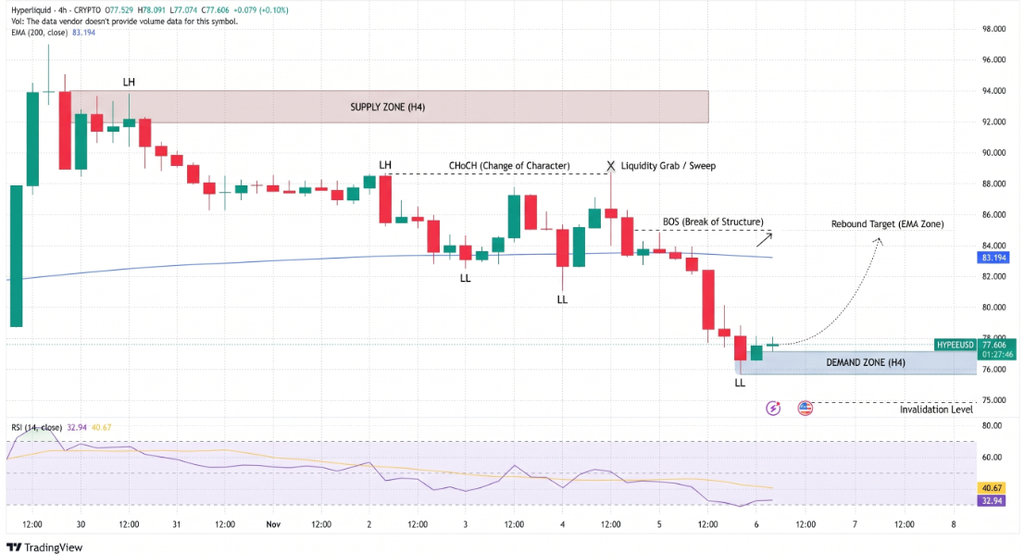
In its September-quarter results, the company reported approximately 38.52 million HYPE tokens worth $3.505 billion at September 30 prices. Its total assets reached $3.764 billion, including $254.6 million in cash and cash-like instruments.
The company also reported quarterly net income of $620.6 million, supported substantially by $803 million in unrealized gains on its HYPE holdings.
These figures highlight the company’s broader strategy of combining token accumulation with infrastructure-related business opportunities.
Conclusion
Hyperliquid Strategies’ pending FCM application represents an important step toward establishing regulated U.S. access to blockchain-based perpetual futures. However, approval of the FCM registration and authorization of permissioned HIP-3 markets remain separate requirements. The outcome could influence Hyperliquid’s expansion, institutional participation and long-term HYPE ecosystem growth, but the company has cautioned that neither approval nor a specific launch timeline is guaranteed.
Sources & Methodology
Primary-source standard: Market-moving facts should link to original data releases, regulator notices, company filings or official project announcements whenever available. Secondary reporting is used for additional context, not as a substitute for original evidence.
Page last reviewed: