Gold prices moved in opposite directions across spot and futures markets on Thursday as a stronger U.S. dollar and renewed expectations of Federal Reserve rate increases weighed on bullion. The latest inflation figures reinforced concerns that borrowing costs could remain elevated, limiting gold’s appeal despite a partial recovery from the previous session’s sharp decline.
Gold trades mixed near $3,583
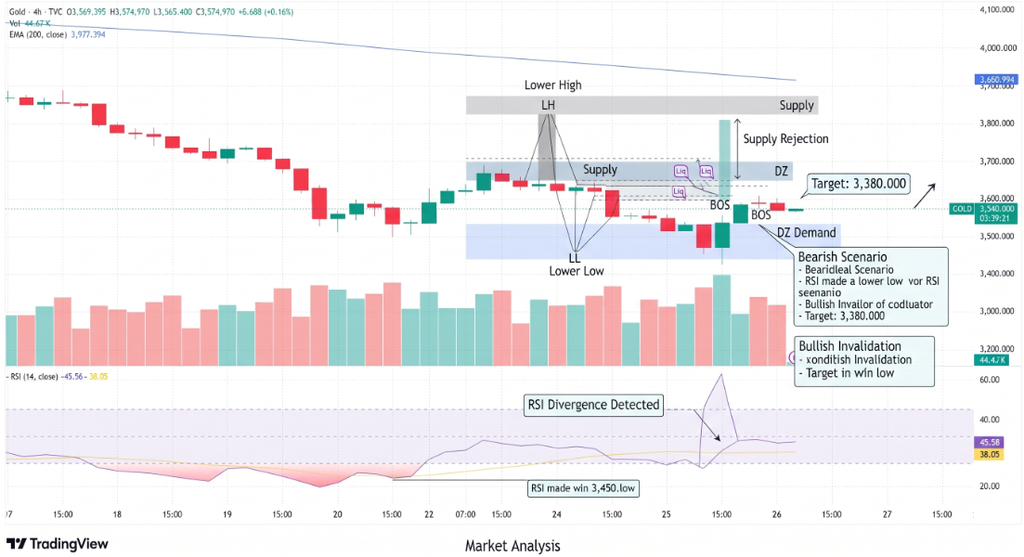
At 22:08 ET on Wednesday, November 25, spot gold had slipped 0.1% to $3,583.58 an ounce, while U.S. gold futures had advanced 1.3% to $3,581.10. The figures represent the Asian-session snapshot reported by Investing.com, rather than current live prices.
Other precious metals also recorded gains. Spot silver rose 1% to $41.8215 an ounce, while platinum added 0.6% to $1,300.20. Spot palladium climbed 2% to $883.79, and palladium futures gained 2.4% to $868.25.
The U.S. Dollar Index increased 0.1% to 103.77, adding pressure to dollar-denominated commodities. A stronger dollar generally makes gold more expensive for overseas buyers, potentially reducing demand.
Bullion had briefly fallen below $3,500 an ounce during the previous session before recovering to finish 0.9% higher. Trading conditions could remain thinner than usual on Thursday because U.S. financial markets are closed for Thanksgiving.
Core PCE strengthens Fed rate concerns
The latest U.S. inflation report gave investors another reason to reassess the Federal Reserve’s policy outlook. The Bureau of Economic Analysis reported that core personal consumption expenditures (PCE) inflation increased 3.3% year over year in October, up from 3.1% in September.
The monthly core PCE index also advanced 0.3%. The annual reading exceeded the reported 3.2% market consensus, strengthening concerns that inflation remains too persistent for policymakers to consider easing monetary conditions.
Core PCE excludes food and energy prices, making it a closely watched measure of underlying inflation. The Federal Reserve uses it alongside employment, economic growth and other indicators when setting interest rates.
Higher rates typically weaken gold’s investment appeal because the metal does not pay interest or dividends. When yields on cash and government bonds rise, investors face a greater opportunity cost when holding bullion.
Key market factors include:
- Core PCE: Annual inflation accelerated to 3.3% in October.
- Dollar: The index reached 103.77 in the reported session.
- Fed outlook: Traders increased expectations of another potential rate increase in December.
Tariffs and energy add inflation risks
Gold also faces uncertainty from geopolitical tensions and trade policy. Higher energy prices can feed into transportation, production and consumer costs, complicating the inflation outlook and potentially giving central banks less room to reduce interest rates.
Meanwhile, additional U.S. tariffs targeting major trading partners, including China and the European Union, could raise import costs and create further price pressures. Such measures may support demand for traditional safe-haven assets during periods of uncertainty, but their inflationary consequences can also strengthen expectations for tighter monetary policy.
That creates competing forces for bullion: geopolitical and trade risks can encourage defensive buying, while a stronger dollar and higher interest-rate expectations can discourage investment.
Conclusion
Gold’s recovery above $3,500 offers some relief after its recent decline, but the inflation outlook remains a significant obstacle. The dollar’s direction and upcoming Federal Reserve decisions will be crucial in determining whether bullion can regain momentum or face renewed selling pressure.
Sources & Methodology
Primary-source standard: Market-moving facts should link to original data releases, regulator notices, company filings or official project announcements whenever available. Secondary reporting is used for additional context, not as a substitute for original evidence.
Page last reviewed: