Gold prices advanced in Asian trading on Friday, October 9, as a pause in the US dollar rally and declining Treasury yields improved demand for the precious metal. Spot gold rose 1.1% to $4,177.83 an ounce, while US gold futures gained 1.1% to $4,203.40. Investors also assessed the risk that elevated oil prices could sustain inflation and influence the Federal Reserve‘s interest-rate decisions. Although lower yields are supportive for bullion, expectations of further monetary tightening remain a significant obstacle to a sustained recovery.
Dollar Weakness Supports Gold Prices
The gold price benefited from a softer dollar, which makes dollar-denominated bullion less expensive for buyers using other currencies. Meanwhile, the benchmark 10-year US Treasury yield declined for a second consecutive session, easing pressure on an asset that does not pay interest.
Gold often becomes more attractive when bond yields fall because investors sacrifice less potential income by holding bullion instead of interest-bearing securities. However, the relationship is not automatic: currency movements, geopolitical uncertainty and expectations for inflation can also influence prices.
The latest advance followed a turbulent period in financial markets as investors weighed energy-market disruptions, borrowing costs and the outlook for monetary policy.
Fed Rate Outlook Keeps Traders Cautious
St. Louis Federal Reserve President Alberto Musalem said Thursday that additional monetary tightening could be necessary to return inflation to the central bank’s 2% target within a reasonable timeframe. He indicated that interest rates might need to rise over the next six to nine months but did not specify whether he would support another increase at the October 27–28 policy meeting.
According to market pricing cited in the report, traders assigned an 18% probability to an October rate hike and an 82% chance of an increase in December. These estimates reflect changing expectations rather than a confirmed policy decision. The CME FedWatch Tool tracks market-implied probabilities using federal-funds futures.
Higher interest rates generally weigh on gold by increasing the opportunity cost of holding a non-yielding asset. Investors will therefore monitor incoming inflation and employment data for clues about the Fed’s next move.
Oil Risks and Precious Metals Outlook
Energy prices remain another important influence on bullion. Brent crude oil traded above $104 a barrel in the source report, as concerns about Middle East supply disruptions raised the possibility of persistent inflation.
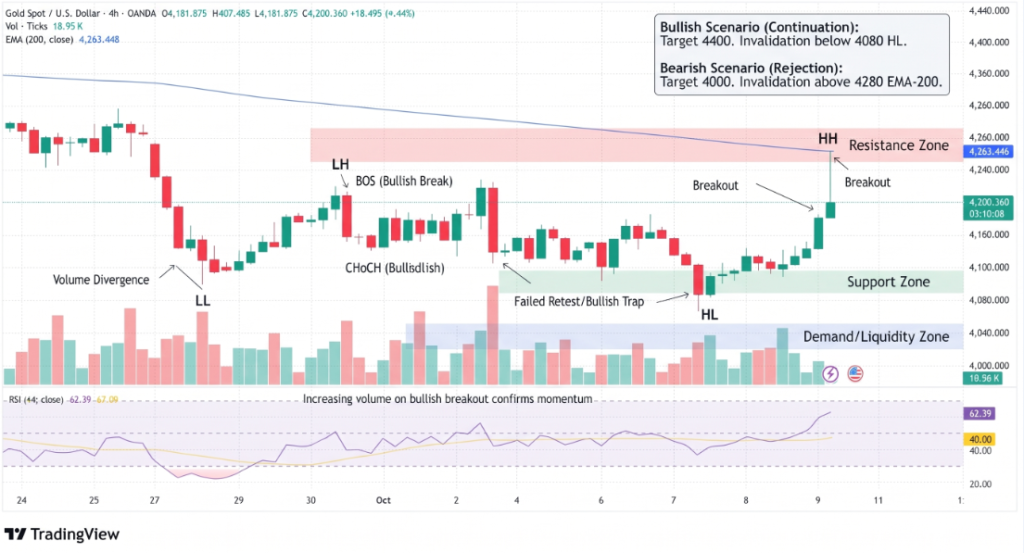
GOLD Price Chart – Source: Tradingview
Higher oil prices can complicate the Fed’s efforts to control inflation, potentially keeping interest rates elevated for longer. That creates competing forces for gold: inflation concerns may support demand for a store of value, while tighter monetary policy can limit gains.
Other precious metals also advanced during the session:
- Silver: Rose 1.7% to $60.19 an ounce.
- Platinum: Gained 2.1% to $1,678.15 an ounce.
Central-bank gold purchases and concerns over government debt could provide additional support for gold. Continued reserve accumulation by the People’s Bank of China is another potential source of demand.
Conclusion
Gold’s 1.1% advance reflects improving conditions for bullion as the dollar weakens and Treasury yields retreat. However, the outlook remains sensitive to oil-driven inflation and the Federal Reserve’s policy path. Sustained gains may depend on whether borrowing costs continue to ease without renewed inflation pressure. Traders will closely watch economic data, energy prices and Fed communications to assess whether the recovery can extend beyond the latest session.
Sources & Methodology
Primary-source standard: Market-moving facts should link to original data releases, regulator notices, company filings or official project announcements whenever available. Secondary reporting is used for additional context, not as a substitute for original evidence.
Page last reviewed: