
Gold prices edged higher on Monday, October 12, as investors weighed hopes of an energy truce between Russia and Ukraine against escalating Middle East tensions. Spot gold (XAU/USD) rose 0.1% to $4,199.72 an ounce, while U.S. gold futures gained 0.2% to $4,223.42. Bullion had advanced 1.3% during the previous week. A weaker U.S. dollar and lower Brent crude prices supported the latest move, although renewed attacks in Saudi Arabia kept energy-supply risks in focus. Investors are also watching U.S. inflation data and Federal Reserve policy for clues about gold’s next direction.
Energy Truce Meets Middle East Risks
U.S. President Donald Trump announced an immediate energy ceasefire between Russia and Ukraine, raising hopes that reduced attacks on energy infrastructure and additional fuel supplies could ease pressure on global oil markets. However, Ukrainian President Volodymyr Zelenskyy said further details were needed, while reports indicated that Russian attacks on Ukrainian infrastructure continued. The announcement therefore has yet to establish a confirmed, lasting truce.
Meanwhile, renewed Houthi attacks on Saudi Arabia intensified concerns about regional stability. A strike on Riyadh’s King Khalid International Airport on Saturday killed 12 people and injured more than 300, followed by another attack on Sunday that killed one person and wounded 11, according to reports. The escalation threatens to complicate the outlook for regional energy supplies.
Brent crude fell approximately 1.2% during early trading, while the U.S. Dollar Index slipped 0.04% to 102.17. These movements helped support gold by easing immediate inflation concerns and making dollar-priced bullion marginally cheaper for buyers using other currencies.
However, the broader relationship between gold and energy prices remains complicated. Higher oil prices can intensify inflation and increase expectations of tighter monetary policy. Because gold does not pay interest, higher borrowing costs can reduce its appeal relative to yield-bearing assets such as U.S. Treasury securities.
Central Banks Support Gold Demand
Despite recent volatility, investment demand and central-bank purchases continue to provide longer-term support for bullion. ANZ analysts have pointed to strong inflows into gold-backed exchange-traded funds (ETFs), alongside concerns about government debt, fiscal deficits and the purchasing power of currencies.
China remains an important source of official-sector demand. The People’s Bank of China added 740,000 ounces of gold to its reserves in September, extending its purchasing streak to 23 consecutive months. Its holdings reached approximately 77.47 million ounces, according to reported reserve data.
Still, persistent inflation could limit further gains if it encourages the Federal Reserve to maintain restrictive policy or consider additional rate increases. Investors will therefore pay close attention to U.S. inflation figures and interest-rate expectations when assessing the outlook for non-yielding assets.
Gold Price Forecast: Key Drivers Ahead
Traders are monitoring several factors that could shape gold’s next move:
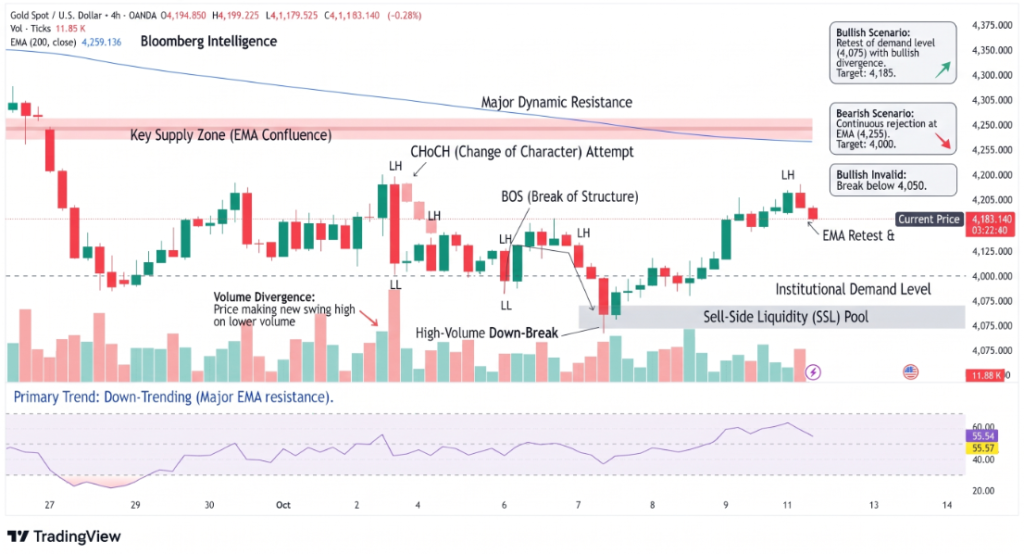
GOLD Price Chart – Source: Tradingview
- Energy prices: Lower crude prices could ease inflation fears and support bullion.
- Federal Reserve policy: Higher interest rates would increase the opportunity cost of holding gold.
- Central-bank buying: Continued reserve accumulation could strengthen underlying demand.
- Geopolitical risks: Escalation in the Middle East could renew demand for defensive assets.
Conclusion
Gold’s move toward $4,200 reflects competing forces rather than a clear shift in market direction. Lower oil prices and a softer dollar are providing near-term support, while Middle East instability and inflation risks remain significant obstacles. Continued central-bank gold purchases offer a longer-term demand cushion, but upcoming U.S. inflation releases and Federal Reserve policy signals will be crucial in determining whether gold can extend its recovery.
Sources & Methodology
Primary-source standard: Market-moving facts should link to original data releases, regulator notices, company filings or official project announcements whenever available. Secondary reporting is used for additional context, not as a substitute for original evidence.
Page last reviewed: