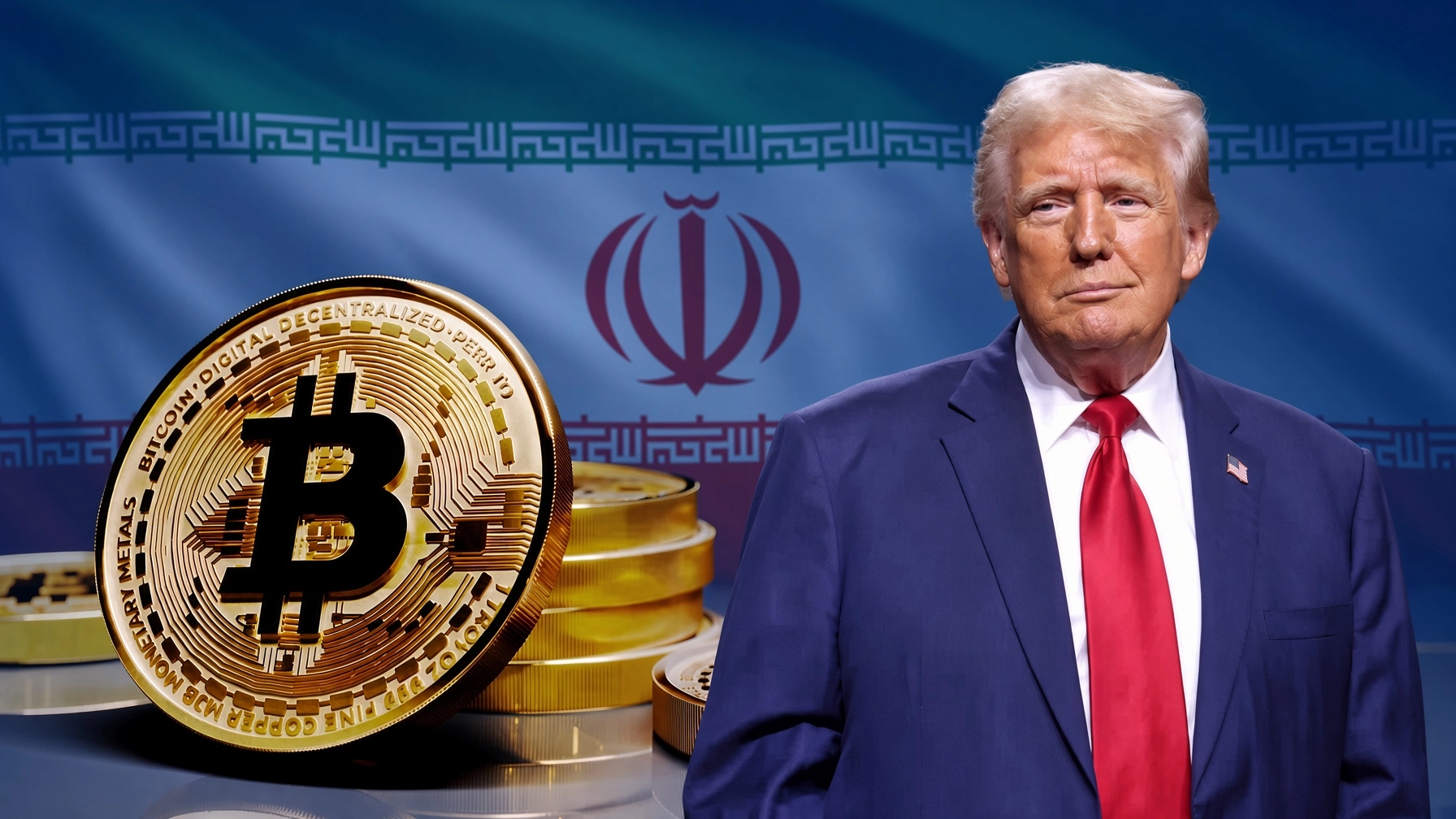
President Trump said Wednesday he was launching what he called the “most crushing economic operation ever taken against any country,” after a 60-day U.S.-Iran memorandum expired without a broader settlement. In a Truth Social post he labeled the campaign an “ECONOMIC D-DAY” and warned that any country offering Iran a financial or commercial “lifeline” would face “TREMENDOUS Economic Consequences.” He gave no new legal text. Brent crude held near $92 a barrel. Bitcoin, which jumped on a separate Treasury buyback announcement, traded near $69,000 on Thursday.
Trump Widens Sanctions After Talks Stall
The U.S. and Israel opened the conflict at the end of February. A June 17 memorandum paused fighting, reopened a path for Iranian oil sales under a Treasury waiver through Aug. 21, and set a 60-day clock for nuclear talks. That clock ran out this week. Trump said Iran “failed to take” a deal. He claimed Iran’s navy and air force were destroyed, its factories were rubble and its currency was “worthless.” Those are his assertions; independent battle-damage assessments were not attached to the post.
The announcement extends Operation Economic Fury, the Treasury-led effort to cut banks, traders and intermediaries that still deal with Tehran. Trump listed oil smuggling, swap lines, cash transfers, exchange houses, ship registries and front companies as targets and told allies to isolate Iran. He did not name countries. The United Arab Emirates said a day earlier that it was cutting financial and economic ties with Iran after a missile threat.
Treasury Secretary Scott Bessent has separately said the campaign will pursue illicit networks “whether in dollars, rials, or crypto.” Trump hosted crypto and market executives at the White House on Wednesday; the public remarks there focused on U.S. digital-asset rules, not a new Iran package.
Oil Edges Higher as Hormuz Risk Persists
Energy traders treated the post as another risk premium, not a new supply shock with a published start date.
- Brent traded near $92 a barrel on Thursday after a four-session rise of more than 5%. Wednesday’s settle was $91.62.
- West Texas Intermediate was near $84–$86. Wednesday’s settle was $85.83, a four-week high.
- The Strait of Hormuz, which carried about one-fifth of global oil and LNG before the war, remains the main price risk. Vessel counts have stayed well below pre-war averages.
JPMorgan has estimated that each extra month of disruption could add $7–$8 a barrel to Brent. Trump told reporters he still had “very draconian sanctions” and “new things” he could apply. Without a Federal Register notice, markets are pricing the threat, not a measured cutoff.
Bitcoin Rally Tracks Treasury, Not War
Bitcoin’s move on Wednesday was driven by the bond market. The Treasury said it would at least double liquidity-support buybacks of 10- to 30-year notes, from a $2 billion cap to at least $4 billion per operation from Sept. 9 through Nov. 4. The 10-year yield slipped toward 4.65% after the 30-year had briefly reached levels last seen in 2007.
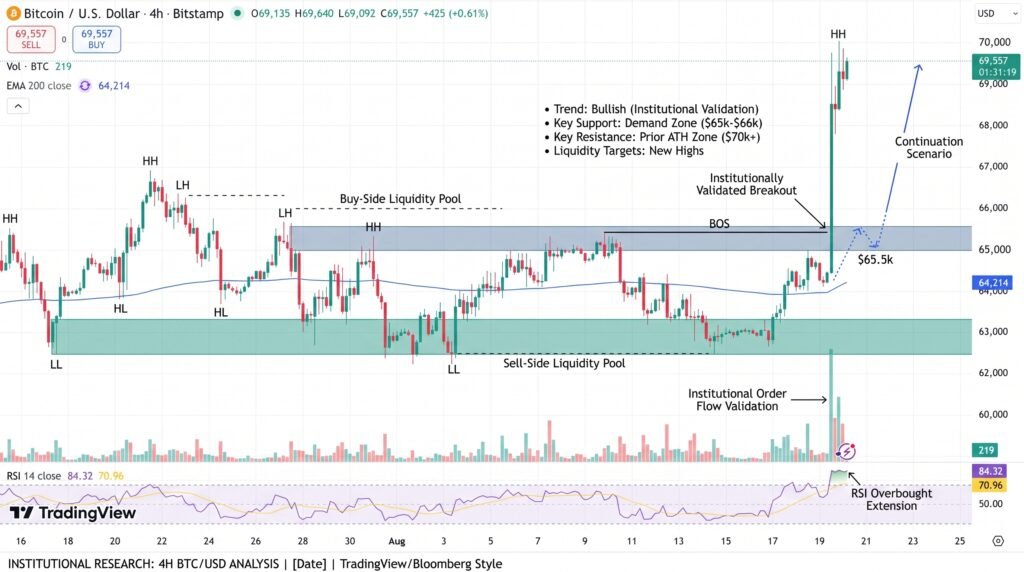
Bitcoin ran from about $64,100 to as high as $70,000, then held near $69,300. CoinGecko put the Aug. 19 close at $69,291. Spot volume jumped sharply. Futures open interest rose as shorts were forced out; CoinGlass recorded more than $1 billion in short liquidations during the spike. The price also traded back around its 200-day moving average, a level it had spent most of the prior nine months below.
The dollar eased toward the high-98 area on the DXY. That mix—lower long yields, a softer dollar and forced covering—explains the crypto bid better than the Iran post, which arrived after the rally was already underway.
Conclusion
Trump’s message is a sanctions warning layered on a war that has already run nearly six months and outlasted its latest diplomatic timetable. Oil is higher because Hormuz traffic is still impaired and because the president threatened secondary penalties without publishing them. Bitcoin is higher because the Treasury stepped into the long end of the bond market. The next facts that matter are whether Treasury issues new designations, whether allies follow the UAE, and whether Hormuz flows recover. Until those appear, the “economic D-Day” is a presidential statement, and $69,000 bitcoin is a liquidity trade.
Sources & Methodology
Primary-source standard: Market-moving facts should link to original data releases, regulator notices, company filings or official project announcements whenever available. Secondary reporting is used for additional context, not as a substitute for original evidence.
Page last reviewed: