
The Japanese yen weakened toward the closely watched 160.00 level against the U.S. dollar as stronger dollar demand and changing Federal Reserve rate expectations reversed much of the yen’s earlier recovery. Japan’s officials responded with renewed warnings that recent currency movements had been excessive, raising the prospect of another intervention to support the yen. MUFG analyst Lee Hardman said the threat could limit further gains in USD/JPY, although the broader dollar rally makes reversing the pair’s upward trend more difficult.
Japan intensifies warnings as yen weakens
USD/JPY has climbed back toward 160.00, a level the currency pair has not approached since early September, according to MUFG. The recovery follows a period when expectations of tighter monetary policy from the Bank of Japan helped strengthen the yen and pushed the exchange rate lower.
Japanese officials have become increasingly vocal as the pair approaches levels associated with previous intervention concerns. Atsushi Mimura, Japan’s top currency official, said recent exchange-rate movements appeared to have been too rapid. He also warned that markets should not forget the intervention episodes earlier in the year.
Such comments are known as verbal intervention. Rather than immediately buying yen in the foreign-exchange market, officials use public statements to discourage speculative selling and signal that authorities are prepared to act.
Japan has previously intervened by purchasing yen and selling dollars to slow sharp declines in its currency. However, verbal warnings do not guarantee an actual intervention, and their effectiveness depends partly on whether traders believe authorities will follow through.
Fed expectations support the US dollar
The dollar’s renewed strength has complicated Japan’s efforts to stabilise the yen. Markets have increasingly considered the possibility of faster Federal Reserve tightening, supporting U.S. yields and demand for the greenback.
This shift has helped reverse the earlier correction in USD/JPY that followed expectations of a more hawkish Bank of Japan policy path. The exchange rate is influenced by the difference between interest rates in the United States and Japan: when U.S. yields rise relative to Japanese yields, dollar-denominated assets can become more attractive to investors.
MUFG expects the Federal Reserve outlook to remain an important driver of the currency pair. Even if intervention concerns restrict USD/JPY gains, broader dollar strength could continue to influence other currency crosses.
USD/JPY forecast: 160 remains pivotal
MUFG believes the risk of intervention should make it harder for USD/JPY to sustain a move above 160.00. Nevertheless, the bank cautions that reversing the pair’s upward trend will be difficult while the dollar continues to strengthen across foreign-exchange markets.
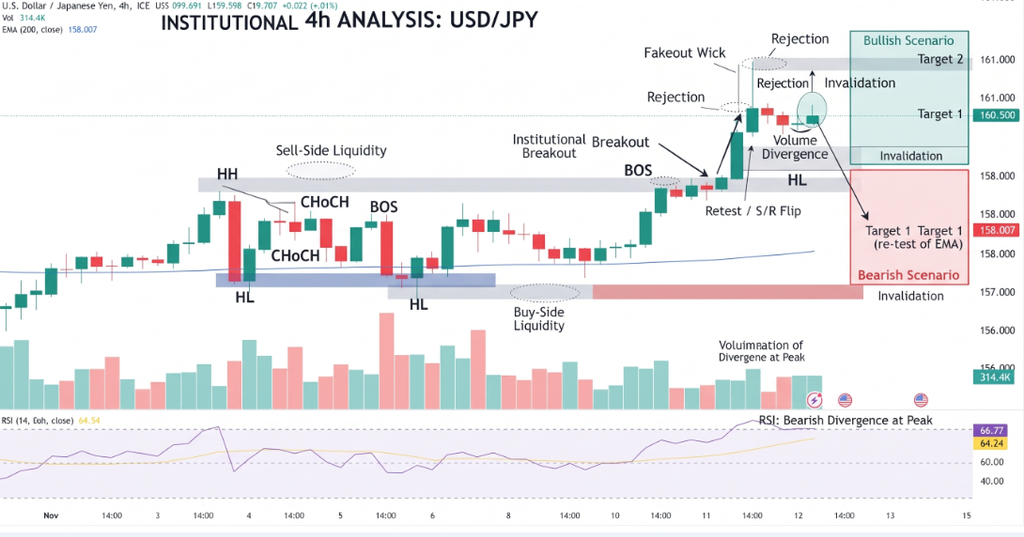
Key factors for traders include:
- 160.00: Major psychological threshold and potential intervention focus.
- Japanese warnings: Signals that authorities are monitoring rapid yen depreciation.
- Fed policy: Expectations of higher U.S. rates remain supportive for the dollar.
- BoJ outlook: MUFG expects another policy increase in December despite dovish comments from board member Asada.
If intervention risk stabilises USD/JPY while the dollar remains broadly firm, other yen crosses could face downward pressure. That would mean the yen may strengthen against currencies such as the euro or Australian dollar even without a broad decline in the U.S. dollar.
Conclusion
USD/JPY is approaching a critical policy-sensitive level as Japan steps up warnings against rapid yen depreciation. The 160.00 threshold could attract intervention-related volatility, but sustained dollar strength may prevent a lasting reversal. Traders will need to weigh the possibility of Japanese action against the widening influence of U.S. interest-rate expectations.
Sources & Methodology
Primary-source standard: Market-moving facts should link to original data releases, regulator notices, company filings or official project announcements whenever available. Secondary reporting is used for additional context, not as a substitute for original evidence.
Page last reviewed: