The answer to “what is trading?” starts with a transaction: buying or selling an asset or contract whose value can change. A position can create a gain or loss, and costs affect the result. Access through an app does not make those outcomes predictable.
This AAFX.IO foundations guide explains transactions, markets, analysis, holding periods and risks. Use it as a starting point for the linked specialist guides rather than a current trading signal or a promise of income.
Risk warning: Trading can lose money. Leverage, gaps and provider problems can make the result worse than a simple price calculation suggests. Hypothetical examples explain mechanics and do not establish an appropriate allocation.
Affiliate disclosure: AAFX.IO may earn a commission through links on this page. This does not change our editorial conclusions.
What is trading in simple terms?
Trading is buying and selling assets or contracts in an attempt to benefit from changing prices. A trader chooses an instrument, quantity and entry, then manages or closes the position under its terms. The result depends on execution and costs as well as the price move. Profits are possible, but losses and operational problems are also possible.
Can trading provide a guaranteed income?
No. A profitable transaction does not establish a dependable income or a repeatable advantage. Prices, execution, costs and market conditions can change, while leverage can magnify losses. Education and a written process help explain decisions but cannot guarantee returns. Money needed for essential spending should not be treated as available merely because a platform offers access to trading.
Trading Foundations: Overview
- What is trading, and what does a position represent?
- Follow the order through to actual execution
- Calculate hypothetical profit, loss and costs
- Compare the actual instrument across market categories
- Match a trading style to time and cost constraints
- Use analysis as evidence and keep its limits visible
- Understand losses, provider checks and reasons to pause
- AAFX.IO: build understanding before choosing a trade
What is trading, and what does a position represent?
Trading is the act of buying and selling financial assets to profit from price fluctuations. For example, a trader might buy shares in a company expecting the price to rise, or trade a forex pair such as EUR/USD to capture currency movement. Unlike long-term investing, trading usually involves shorter time horizons and more frequent transactions.
Transactions reflect buyers and sellers accepting a price. An announcement can change expectations, but a favourable headline does not guarantee a rise. What was already expected also matters. A lower price is not by itself evidence of an attractive trade. Retail traders commonly access markets through a broker or exchange; some transactions take place directly between counterparties.
Trading matters to the wider economy because it:
- Enables price discovery: transactions reveal the prices buyers and sellers accept; a market price need not equal fundamental value.
- Provides liquidity: active buyers and sellers can make dealing easier, although liquidity can disappear during stress.
- Supports growth: primary markets help issuers raise capital; secondary-market trading lets investors transfer existing holdings.
The word position describes exposure created by holding an asset or entering a contract. Its value can change after the transaction. The motive for entering does not remove the need to understand the product. Price, quantity, costs and the agreement determine the result, rather than whether someone labels the activity a trade or an investment.
A market price is the price accepted for a particular transaction, not a guarantee of fundamental value or of what another order will receive. A precise quote can still change before execution. Keep that distinction in mind when forming a price view, especially when the position represents a much larger exposure than the cash initially committed.
The trading-versus-investing guide develops objectives and holding periods. A longer horizon does not by itself repair a failed short-term plan. Decide what would challenge the original reasoning before entering, rather than changing the label afterward to avoid recognising a loss.
Follow the order through to actual execution
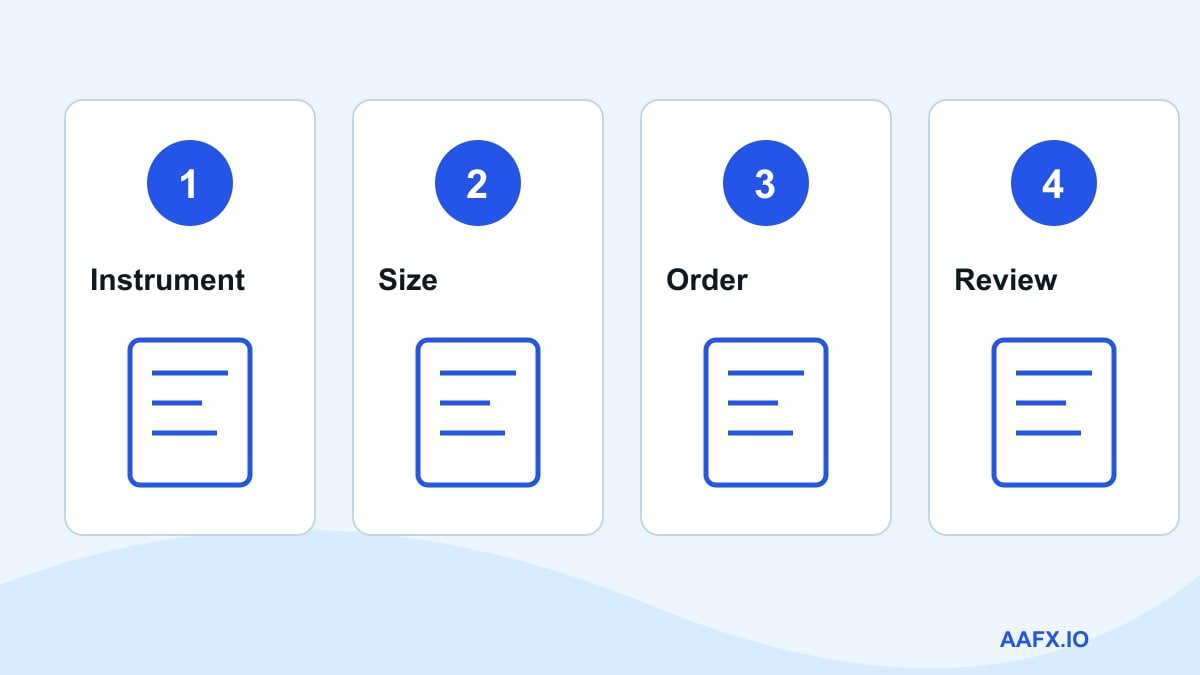
A trade follows four simple steps: you open an account with a regulated broker, fund it, open a position (buy or sell an asset), and close the position later to lock in a profit or loss. If you buy an asset and its price rises before you sell, you profit; if it falls, you take a loss. You can also profit from falling prices by “going short”: selling first and buying back later at a lower price. Short positions also lose money if prices rise, and their borrowing or financing costs can differ from buying.
Most retail traders now access markets online through a trading platform, using tools like charts and real-time data to decide when to enter and exit.
An accepted instruction is not necessarily a completed trade. Check whether it is active, partly filled, fully filled, cancelled or rejected. A partial fill can leave a remainder open. Confirm the instrument, direction, quantity, account, order conditions and session eligibility before submission, then inspect the actual confirmation afterward.
The SEC execution explanation describes how routing and changing prices affect stock orders. Its market-specific details should not be applied to every other product. Learn the actual account rules, including which conditions can prevent a fill or make an execution differ from the quote first displayed.
| Order | Main condition | Practical limit |
|---|---|---|
| Market | Seeks available execution | Price not guaranteed |
| Limit | Sets a price boundary | May remain unfilled |
| Stop | Activates after a trigger | Trigger not a guaranteed fill |
Calculate hypothetical profit, loss and costs
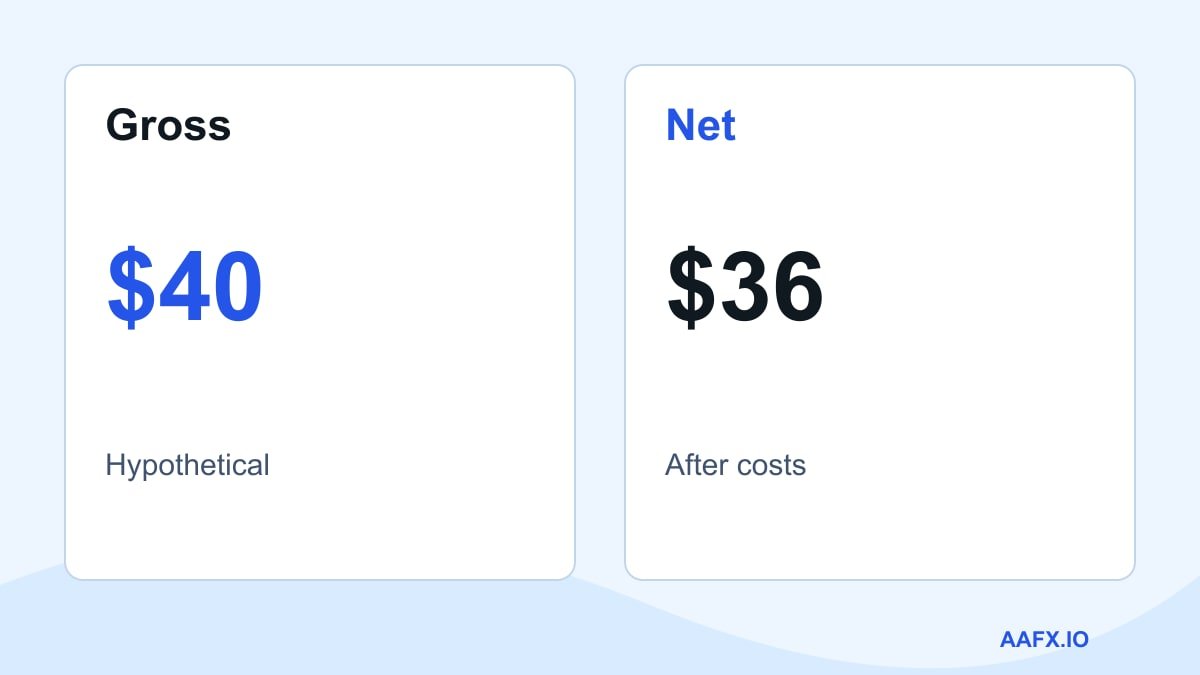
Suppose you buy 10 shares at $50 each in a cash account: your position costs $500. Selling all 10 at $54 gives $540, a $40 gross profit. If total transaction costs are $4, the net profit before tax is $36. Selling at $46 instead gives a $40 gross loss, or $44 after those same costs. These are hypothetical prices, not a recommendation.
The general calculation for a simple long position is (sale price − purchase price) × units − costs. Spreads, commissions, currency conversion and financing can change the result. Read the broker-fee guide before comparing advertised prices. With leverage, exposure is larger than the cash committed: losses can trigger liquidation and, depending on the product and protections, exceed the initial deposit. The SEC’s margin-account bulletin explains securities borrowing risks.
The general formula is useful only when its units match the instrument. A contract can require a multiplier, a quote convention or a currency conversion. Record those inputs separately and check the arithmetic before comparing the result with account equity. A low nominal share or coin price does not establish a small economic exposure.
Use the broker-fee guide and the leverage explanation to separate trading charges from the amount of collateral. The $4 round-trip charge in this example is invented, not a current provider quote. Equal favourable and adverse price moves produce unequal net outcomes after those charges.
| Entry | Exit | Gross result | Net before tax |
|---|---|---|---|
| 10 shares at $50 | 10 at $54 | $40 gain | $36 gain |
| 10 shares at $50 | 10 at $46 | $40 loss | $44 loss |
Compare the actual instrument across market categories
Stocks, currencies, commodities and crypto are useful categories, but each can contain different legal products. A company ticker might represent a share or a CFD. A gold label might represent a physical holding, a fund or a derivative. Similar charts do not establish identical ownership, custody, financing or settlement.
The table below is a starting point for questions rather than a ranking. Access and dealing conditions depend on the instrument, provider and jurisdiction. A continuously accessible platform does not guarantee liquidity or stable prices, while an exchange-session label does not describe every order or extended-hours arrangement.
| Market | Typical reference | Question to resolve |
|---|---|---|
| Stocks | Company equity | Actual shares or a price-linked contract? |
| Forex | One currency relative to another | Currency delivery or leveraged contract? |
| Commodities | Raw materials | Physical holding, fund or derivative? |
| Crypto | Digital assets | Withdrawable assets, custody claim or derivative? |
Use the forex foundations guide, the crypto-starting guide and the spot-versus-futures comparison to investigate those distinctions. The terms of the product matter more than how familiar its name appears. Options are derivatives referencing an underlying asset rather than a separate underlying market category.
A useful instrument note records what is owned or owed, units represented, costs, closure process and any expiry. If one answer is missing, the comparison remains incomplete. Do not select a product solely because its nominal unit price is low or someone else describes the category as suitable for beginners.
Match a trading style to time and cost constraints
Your strategy defines how long you hold positions and how much time trading demands. The three core styles:
1. Day trading
Day traders open and close all positions within the same day, attempting to profit from intraday moves. It relies heavily on technical analysis, fast decisions, and constant screen time. Popular in liquid markets like forex and large-cap stocks. Hypothetical example: buying TSLA at the open and selling hours later on a small uptick.
2. Swing trading
Swing traders hold positions for several days or weeks to capture larger moves, blending technical and fundamental analysis. It still requires a monitoring and review plan even when positions are held beyond one session. Hypothetical example: buying gold during a dip, expecting a rebound on rising geopolitical tension.
3. Position (long-term) trading
Position traders hold for months, focusing on major trends and fundamentals. It sits closest to investing: see trading versus investing for the full comparison. Hypothetical example: buying Bitcoin in a downturn and holding through an adoption cycle.
These are broad descriptions, not a personal suitability test. A short holding period can make frequent execution and fixed charges important. A longer period can increase financing or event exposure. Compare the trading-styles guide with the actual product and your availability rather than assuming one label removes the need to monitor.
Write down when a review is possible and what happens if an announcement or outage occurs between reviews. An approach can require decisions during work or sleep, or depend on information you cannot reasonably investigate. A practical schedule is part of the process, not a guarantee that any particular strategy will produce a gain.
Use analysis as evidence and keep its limits visible
Technical analysis
Technical analysis studies price charts and patterns to anticipate future moves. Common tools include moving averages, Bollinger Bands, and the RSI indicator. A chart shows what has already happened. Traders may form a conditional breakout scenario, but the eventual outcome is uncertain and failed breakouts can produce losses.
Learn how indicators, trend structure and invalidation levels fit together in our technical analysis guide.
Fundamental analysis
Fundamental analysis weighs an asset’s intrinsic value using economic data and financial health. Key inputs include:
- Economic indicators: GDP, CPI, and jobs data (the reaction depends on the surprise relative to expectations and the policy outlook).
- Earnings and industry trends: compare revenue, margins, debt and guidance with expectations rather than treating one headline as a buy signal.
Technical and fundamental analysis answer different questions and can be combined. Neither removes uncertainty.
Keep observations separate from interpretations. A reported increase in revenue is an observation; concluding that a share is attractive also requires price and expectations. A move above a previous high is an observation; concluding that it must continue adds an uncertain forecast. Our technical-analysis guide develops chart concepts and their limitations.
Save the information available at entry so a later outcome does not rewrite the original reasoning. A profitable result can follow a poor decision, while a reasoned decision can lose money. Review the outcome and the process separately. A short favourable sequence is not enough to establish that a method will retain an advantage as conditions change.
Understand losses, provider checks and reasons to pause
Trading carries real risk, and being aware of it is essential:
- Volatility: prices can swing sharply; a geopolitical shock can spike oil in hours.
- Emotional decisions: fear and greed drive panic-selling and overtrading.
- Leverage: leverage amplifies gains and losses, and can wipe an account if misused.
- Market events: rate decisions or elections can move markets fast.
Plan position size and an exit before entering, and avoid using essential household money. A standard stop-loss is a trigger, not a guaranteed execution price: gaps and slippage can increase losses. Our risk management and position-sizing guide explains how exposure and exit distance interact.
Regulation depends on the country, product and legal entity serving the account. The SEC oversees US securities markets, while the FCA and ASIC have roles in the UK and Australia. Do not assume one registration covers every product or overseas customer. Check the exact firm, website and permissions against the relevant official register. Protection or compensation arrangements have eligibility limits and generally do not cover ordinary market losses. Our financial-regulator guide explains the differences.
New traders often overtrade, skip stop-losses, and let fear or greed drive decisions: a fast route to losses. A written plan, cost-aware testing and a trading journal can help identify these mistakes, but cannot ensure a profitable strategy.
The position-sizing guide connects quantity with an adverse price scenario and charges. Consider the combined exposure of existing holdings rather than treating every proposed trade in isolation. A percentage rule copied from another trader may not fit your circumstances or the contract being considered.
A stop-loss is a trigger, not a guaranteed fill, as explained in the SEC stop-order bulletin. Model a worse execution as well as the intended exit. A stop-limit order can leave the position open when its price boundary cannot be met.
The FCA authorisation guidance explains its checking routes. Other jurisdictions and products have their own. Pause if you cannot explain the contract, authenticate the provider or calculate the exposure, or if a plausible loss would interfere with essential spending. Choosing not to participate is a valid outcome.
AAFX.IO: build understanding before choosing a trade
- Learn the basics: understand markets, strategies, and risks before risking money.
- Choose your market: compare the instrument, trading hours, volatility, costs and adverse price and execution scenarios.
- Open a trading account: verify the legal entity and relevant permissions in your jurisdiction. Use our broker-selection guide.
- Master the essentials: order types, risk management, and analysis.
- Practice first: use a demo account to learn the platform, order handling and position sizing.
- Review before going live: decide whether real-money trading is appropriate at all. Demo results do not reproduce every live cost, fill or emotional pressure.
Start with a product you can explain, then connect the provider, units, costs and possible loss. Learn the order controls and record the actual result. The hypothetical example shows why even a simple transaction needs more than a price view. More complex contracts add terms that must be checked rather than inferred from a chart.
Continue with the broker-selection guide and the leverage guide. Educational videos are available on TikTok and Instagram. Review this foundations guide annually and when material access or regulatory guidance changes.
Affiliate disclosure: Commercial links may generate compensation for AAFX.IO. This guide does not certify a provider or guarantee that a product or trading method is suitable or profitable.
Educational disclaimer: General information only, not personal investment or legal advice. Verify current product terms and rules relevant to your circumstances.
Written and reviewed by Arslan Ali Butt
MPhil Behavioural Finance, MBA Finance, 10+ years in forex dealing and analysis.
Last reviewed: 29 October 2026.
How we reviewed this guide: We checked SEC stock execution, margin and stop-order explanations and FCA authorisation guidance during 28-29 October 2026. Prices and charges are hypothetical. The original publication history is retained; no provider-account test is claimed.
Frequently Asked Questions
How is trading different from investing?
The distinction usually concerns objectives, holding period and decision process rather than an absolute boundary. A trader may focus on a shorter price movement, while an investor may hold an asset for a longer ownership thesis. Both can lose money. Define the purpose and review conditions before entry, and avoid reclassifying a failed short-term trade simply to postpone recognising a loss.
Do I always own the asset shown on a trading screen?
No. A platform can display an actual share, a fund interest or a derivative referencing an asset price. The contract and account terms establish the rights and obligations, not the familiar name or chart. Check ownership, custody, settlement, financing and closure arrangements before comparing possible outcomes. Different products linked to the same market can behave differently over a holding period.
Can a trader benefit from falling prices?
Some products or arrangements permit short exposure, where a falling reference price can produce a gain before costs. The mechanics differ between borrowed-share short selling and price-linked derivatives. A rising price can produce a loss, and borrowing, financing or other obligations may apply. Do not assume that a sell button has the same meaning or loss profile across every account and instrument.
How much money is needed to start?
There is no universal amount. Provider minimums, dealing units, account terms and costs determine access, while your circumstances determine whether participation is appropriate. A small deposit requirement does not establish a small exposure or affordable loss. Work through a plausible adverse scenario and essential financial commitments first. You can learn the mechanics without submitting a live order or funding an account.
Is the most volatile market the best trading opportunity?
Not necessarily. Volatility describes price variation, while a useful decision also depends on liquidity, costs, execution, position size and the research you can perform. A larger price move can work against a position as readily as in its favour. Compare the actual instrument and account rather than treating a volatile market label as evidence of suitability or a profitable opportunity.
Does a stop-loss guarantee the amount I can lose?
No. A standard stop order becomes a market order after its trigger, and the execution price can differ from the stop price. Gaps or limited liquidity can increase the difference. A stop-limit order can remain unfilled. Read the actual provider rules and include an adverse execution scenario when calculating position size rather than treating the intended exit as a guaranteed outcome.
Are trading costs important on small positions?
Yes. Fixed charges can represent a large proportion of a small transaction, and repeated trading repeats relevant costs. Spreads, commissions, financing and conversion can change the result even when the price moves as expected. Use the schedule for the exact product and holding period. Do not increase exposure merely to make one cost percentage look smaller without reconsidering the possible loss.
Can a demo account prove a strategy works?
No. A demo can help you learn the interface, order controls and basic calculations, but live fills, costs and the experience of risking money may differ. A short practice sequence also cannot establish that future conditions will be the same. Record assumptions and limitations, then separate operational learning from evidence about whether a trading method has a durable advantage.
Does regulation prevent trading losses?
No. Relevant authorisation and account protections address particular provider activities and risks; they do not guarantee the performance of an asset or strategy. Check the exact entity, permissions and customer terms through independent official sources. A real licence number does not authenticate every website using it, and eligibility for complaint or compensation arrangements depends on the actual account and applicable rules.
What should I understand before placing a trade?
Be able to identify the product, what you own or owe, the units represented, how a price change affects the account and which costs apply. Understand order handling, custody or counterparty arrangements and the consequences of an adverse exit. If a key answer is missing, pause. An approved account or accessible platform does not replace those separate product and risk decisions.
Sources & Methodology
Primary-source standard: Market-moving facts should link to original data releases, regulator notices, company filings or official project announcements whenever available. Secondary reporting is used for additional context, not as a substitute for original evidence.
Page last reviewed: