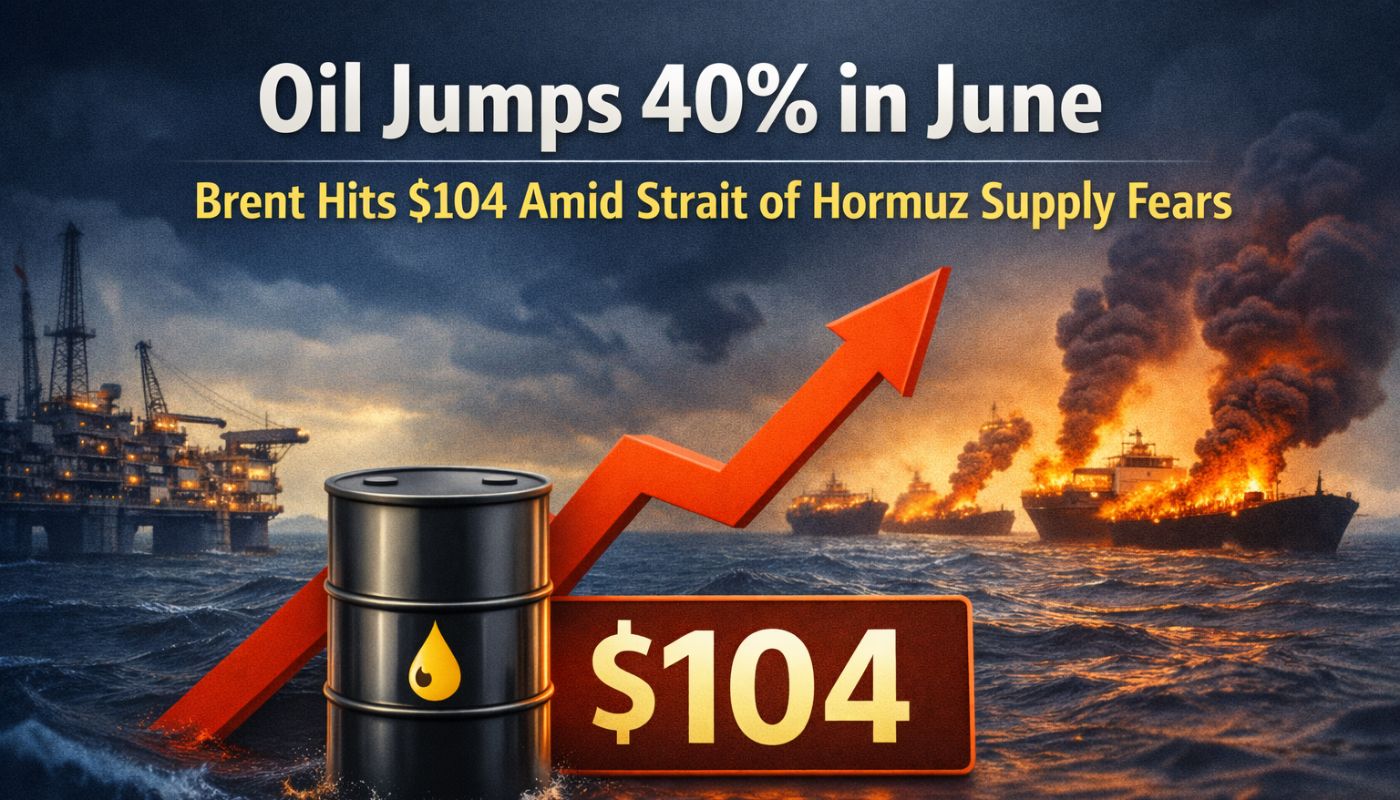
Global oil prices moved higher on Monday as investors refocused on growing threats to key energy facilities in the Middle East. The market remains on edge after recent military actions raised concerns about supply disruptions in one of the world’s most important oil-exporting regions.
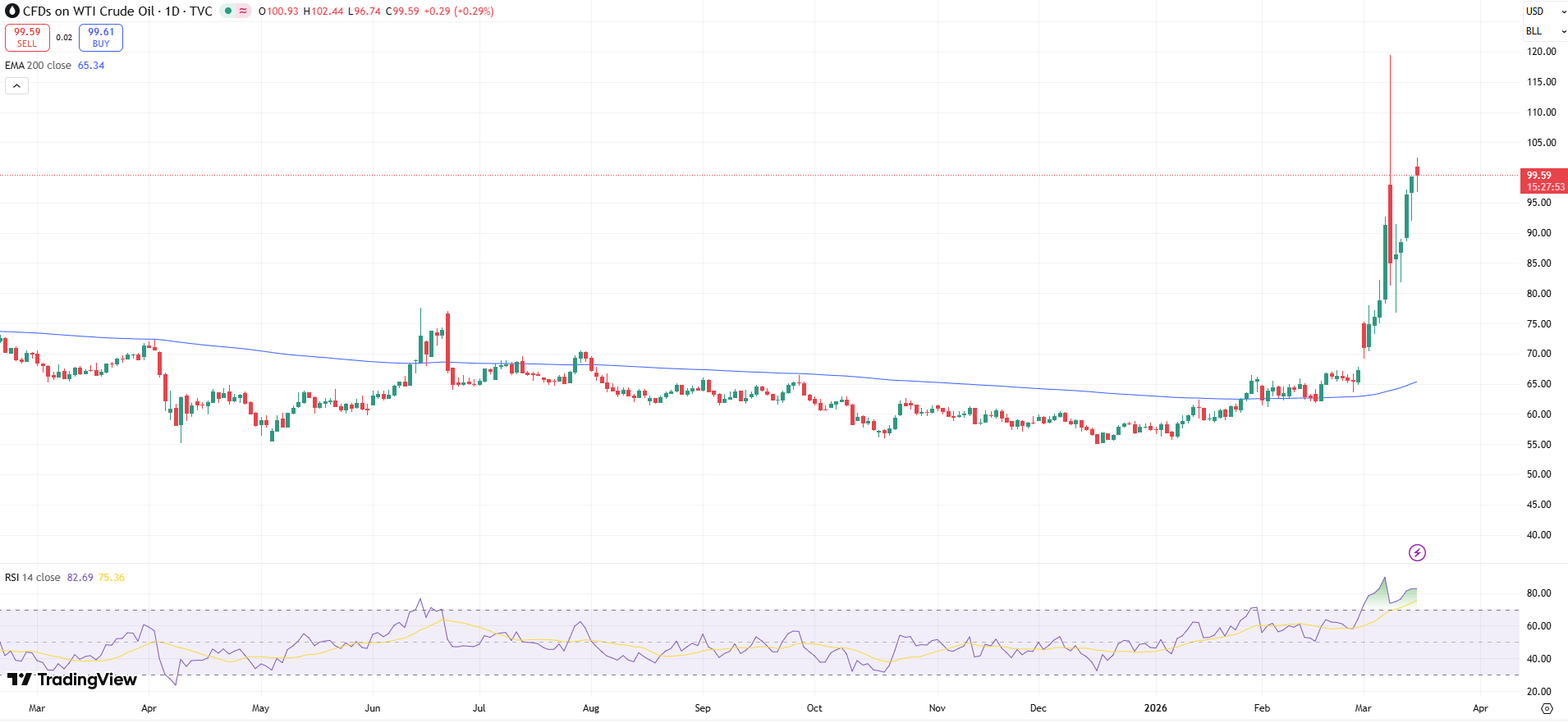
Brent crude rose $1.27, or 1.2%, to $104.41 per barrel by early trading. Meanwhile, U.S. West Texas Intermediate (WTI) gained 54 cents, or 0.6%, to $99.25 per barrel. The latest gains come after both benchmarks surged strongly in the previous session, when Brent climbed $2.68 and WTI increased by nearly $3.
The oil market has experienced a dramatic rally this month. Prices have jumped more than 40%, reaching their highest levels since 2022. The surge followed coordinated military strikes by the United States and Israel on Iranian targets, prompting Tehran to halt shipping through the Strait of Hormuz.
This narrow waterway carries roughly 20% of the world’s oil supply, making any disruption extremely significant for global energy markets.
Attacks Raise Supply Concerns
Over the weekend, tensions escalated further after U.S. strikes targeted sites on Kharg Island, a crucial hub that handles about 90% of Iran’s oil exports. Although officials suggested the strikes focused on military infrastructure, analysts say the attacks still threaten energy flows.
Strategists at ING warned that damage or instability around Kharg Island could disrupt supply because much of Iran’s oil passes through the facility before entering global markets.
Soon after the strikes, Iranian drones reportedly hit an oil terminal in Fujairah Oil Terminal. While operations resumed shortly afterward, it remains unclear whether activity has fully returned to normal.
Fujairah is strategically important because it sits outside the Strait of Hormuz and serves as an alternative export route for the United Arab Emirates.
Key supply facts shaping the oil market include:
- 1 million barrels per day of UAE Murban crude move through Fujairah
- That volume represents about 1% of global oil demand
- The Strait of Hormuz normally carries around 20% of global supply
- Oil prices have already surged over 40% this month
These numbers highlight why traders react quickly whenever geopolitical risks appear near major export routes.
Global Response and Reserve Release
In response to the supply risks, world leaders are discussing ways to secure energy shipments. Donald Trump said the United States is urging other countries to help protect shipping through the Strait of Hormuz.
Washington is reportedly in talks with several nations to patrol the route and prevent further disruptions.
At the same time, the International Energy Agency announced plans to release more than 400 million barrels of emergency oil reserves to stabilize markets. According to the agency, this would represent the largest coordinated release of oil stocks in history.
The reserves will reach markets in phases:
- Asia and Oceania: immediate release
- Europe and the Americas: supplies expected by the end of March
Despite the tense situation, Chris Wright expressed optimism, saying the conflict could end within a few weeks, potentially allowing oil supplies to recover and prices to stabilize.
For now, however, global markets remain highly sensitive to developments in the Middle East.
Sources & Methodology
Primary-source standard: Market-moving facts should link to original data releases, regulator notices, company filings or official project announcements whenever available. Secondary reporting is used for additional context, not as a substitute for original evidence.
Page last reviewed: